
AI Tools vs. AI Strategy: Why Most Projects Fail
The AI Foundations Library: Lesson 6 of 8
Executive Summary
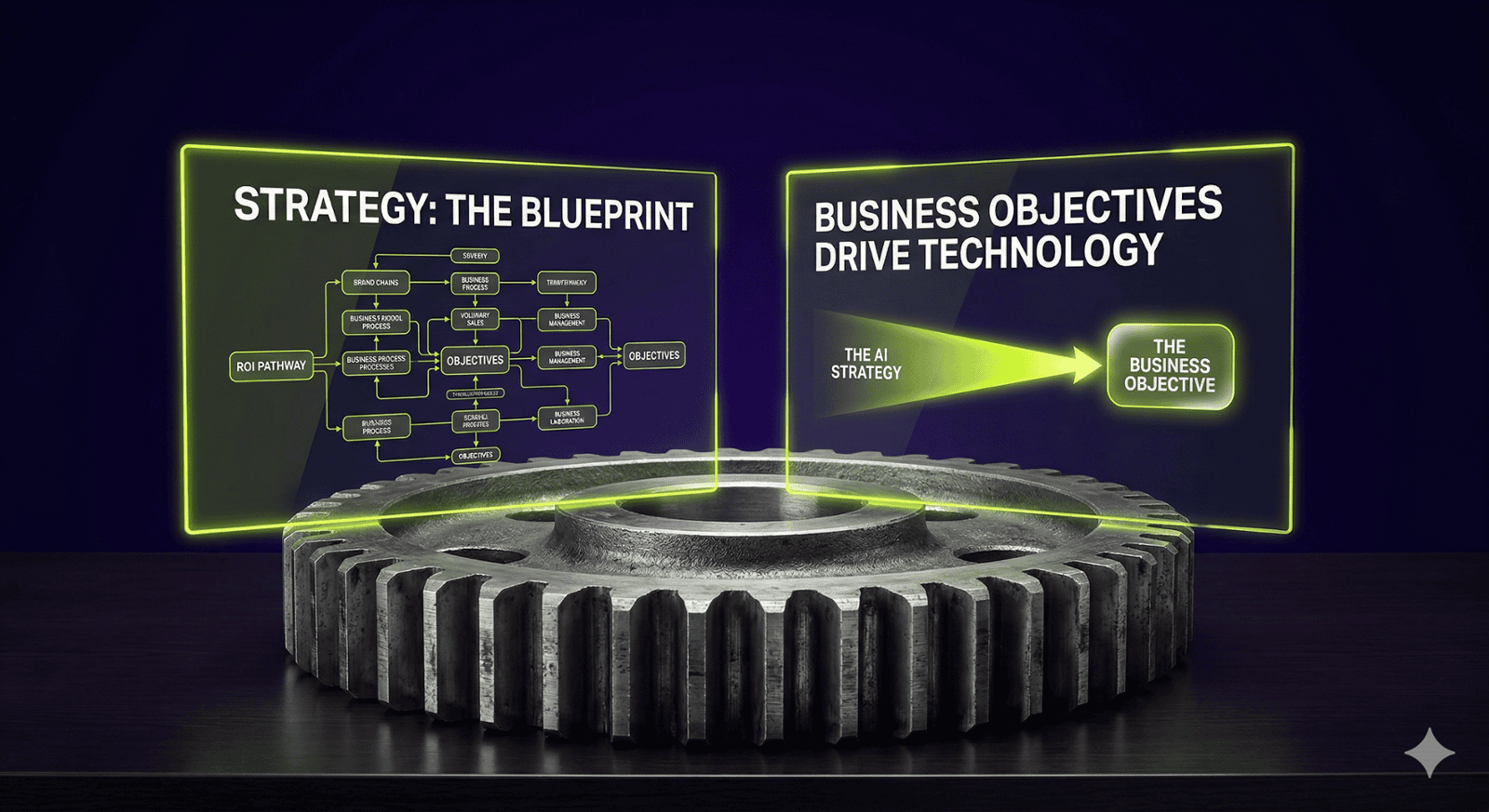
1. The Gear and the Blueprint
Technology is merely the engine. Without a blueprint, you are just spinning gears in a vacuum.
2. The Velocity Framework: Concept to Cashflow in 90 Days
I do not advocate for the traditional "12-month implementation." In a 2026 market, a one-year plan is obsolete by month four. Instead, a successful AI strategy operates in high-velocity 90-day cycles:
Days 1–30: The Diagnostic & Pilot. We identify the highest-impact use case (the "low-hanging ROI") and launch a "Locked-Box" pilot to prove the mathematical model works for your specific data.
Days 31–60: Integration & Feedback. We integrate the pilot into a live department. This is where we move from a "tool" to a "workflow," measuring real-world efficiency gains.
Days 61–90: Calibration & Scale. We refine the model based on performance data. By Day 90, the project isn't just "launched" - it is operational and beginning to pay for itself.
3. Avoiding "Shiny Object Syndrome"
Many firms suffer from "Shiny Object Syndrome" - purchasing high-end AI licenses because of a demo they saw on LinkedIn.
The Tool-First Approach: "We bought 500 Copilot licenses. Now, what should we do with them?" (Result: Low adoption, wasted spend).
The Strategy-First Approach: "We spend 4,000 hours a month on manual data entry in the Finance team. Which AI architecture will automate 70% of that?" (Result: Clear ROI, targeted spend).
4. The "Strategy" Checklist for 2026
Before you sign a software contract, you must answer three questions:
Alignment: Does this tool solve a specific bottleneck in our 90-day roadmap?
Architecture: Does this tool "talk" to our existing data, or is it another silo?
Adoption: Who is the "Change Champion" responsible for making sure the team actually uses it?
Executive Takeaway
A tool solves a task; a strategy solves a business problem. If you start with the tool, you are a customer. If you start with the strategy, you are a leader.